
New Puppy Checklist: First-Week Essentials
The first week with a puppy is part joy, part exhaustion, and part wondering if you should have bought stock in paper towels. Most new owners over-buy the cute stuff and under-buy the practical stuff, then realize at 11 p.m. that they have no plan for the 3 a.m. whine.
This checklist focuses on what you actually need in the first seven days — the supplies that keep your puppy safe and comfortable, and the routine that keeps you from burning out before week two.
Before your puppy comes home
- Puppy-proof one room first, not the whole house. Move shoes, cords, remote controls, and anything chewable off the floor.
- Set up a crate or playpen in a quiet corner where the puppy can sleep without being in the middle of household traffic.
- Choose a potty spot outside — same patch of grass, same door, every time.
- Find a veterinarian and book the first appointment within 48 to 72 hours of pickup.
- Buy food in advance, and ask the breeder or shelter what brand the puppy is currently eating so you can transition slowly.
The supply list that matters
You do not need everything on the puppy aisle. You need a short list of things that solve real first-week problems: eating, sleeping, pottying, chewing, and staying safe.
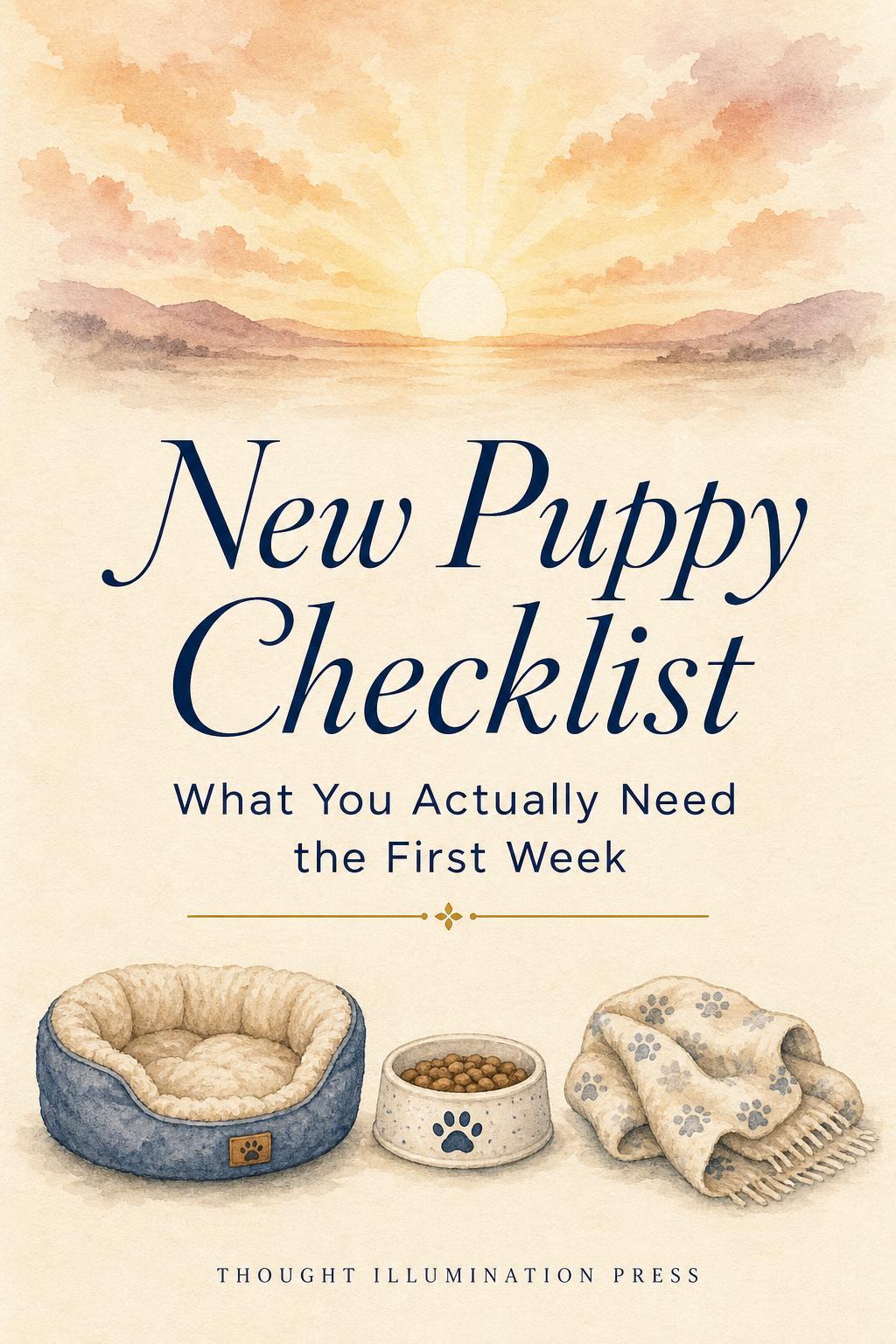
We've handpicked our favorites — including the bed, bowls, and blanket below — on our New Puppy Essentials We Love page, starting with the First 48 Hours must-haves.
- Puppy food with an AAFCO nutritional adequacy statement for growth. Large-breed puppies may need large-breed puppy formula.
- Shallow food and water bowls with a nonslip base — a puppy who can tip the water bowl absolutely will.
- A properly fitted collar or harness and a sturdy fixed-length leash. You should be able to fit two fingers between the collar and the puppy's neck.
- A crate or playpen sized so the puppy can stand, turn around, and lie down comfortably.
- A washable orthopedic bed with minimal stuffing, or a crate mat that survives accidents.
- Puppy pads if you live in an apartment or cannot get outside quickly, plus an enzymatic cleaner for the accidents that will happen.
- Poop bags and a holder that clips to the leash.
- Safe chew toys and a puzzle toy or KONG you can fill and freeze for teething relief.
- An ID tag with your phone number, and a plan to microchip at the first vet visit if it hasn't been done already.
- Flea, tick, and heartworm prevention — but only after your vet confirms the right product and timing for your puppy's age and weight.
The first 48 hours
- Keep the first day low-key. Too many visitors, too much freedom, and too many new experiences in one day exhaust a small puppy.
- Feed the same food the puppy was eating, then transition gradually over seven to ten days if you switch brands.
- Take the puppy to the vet within two to three days for a wellness check, vaccine schedule, parasite prevention, and a personalized care plan.
- Start the sleep routine immediately. Most puppies cry the first few nights. A soft waterproof blanket, a soft toy, and the crate near your bed help.
- Begin potty breaks on a schedule: first thing in the morning, after eating, after napping, after play, and right before bed.
The routine that saves your sanity
Puppies thrive on predictability. A simple daily rhythm — eat, potty, play, sleep, repeat — teaches your puppy what to expect and reduces anxiety for both of you.
- Supervise constantly or use the crate when you cannot watch the puppy. Most accidents happen during the two minutes you looked away.
- Keep initial walks short. Five to ten minutes is plenty for a young puppy's joints and attention span.
- Start gentle socialization early: new sounds, surfaces, and people in small, positive doses.
- Use treats for training, but keep them to 10 percent or less of daily calories. Break treats into tiny pieces.
- Take a photo next to the same object every week. The growth difference is worth it.
What you can skip for now
- Expensive outfits and costumes — comfort and safety matter more than cuteness.
- A huge variety of treats before you know what upsets your puppy's stomach.
- Rawhide, cooked bones, or hard chews that could splinter or break teeth.
- Fancy gadgets until you know your puppy's actual habits and size.
- Guilt. The first week is hard for almost everyone. Sleep deprivation and second-guessing are normal.
The first week is about survival, not perfection. Get the basics right — safe space, good food, a vet plan, and a predictable routine — and the rest settles in faster than it feels like it will. Your puppy does not need a perfect owner; they need a consistent one. And when someone you love brings home a pup of their own, You're Gonna Want To Know This… About Your New Puppy lets you pass along everything you learned the hard way.
A quick note from us: Thought Illumination Press is a participant in the Amazon Services LLC Associates Program, an affiliate advertising program designed to provide a means for sites to earn advertising fees by advertising and linking to Amazon.com. As an Amazon Associate, we earn from qualifying purchases made through links in this article — at no extra cost to you. It helps us keep creating meaningful books.
Common questions
- What do I need for a new puppy the first week?
- Puppy food, shallow bowls, a collar or harness and leash, a crate or playpen, a washable bed, puppy pads, an enzymatic cleaner, poop bags, safe chew toys, and an ID tag. Schedule a vet visit within 48 to 72 hours.
- How soon should a new puppy see a vet?
- Within two to three days of coming home. The vet will check overall health, set a vaccine schedule, recommend parasite prevention, and help you choose the right food for your puppy's breed and size.
- How often should I take a puppy outside the first week?
- Take them out first thing in the morning, after every meal, after naps, after play sessions, and right before bed. Young puppies may also need a trip outside once or twice during the night.
- Should I crate train my puppy the first week?
- Yes, introduced gently. A crate gives your puppy a safe, den-like space and helps with potty training and sleep. Start with short, positive sessions and never use the crate as punishment.
- What should you not do with a new puppy?
- Avoid overwhelming them with too many new experiences in one day, feeding random human food, giving unsafe chews like cooked bones, or letting them roam unsupervised before they are potty trained.